11/18/2026
Do You Still Have to Go to Court for an Uncontested Divorce in Arizona?


An amicable divorce in Arizona does not require you to be friends with your spouse or accept terms you feel are unfair. Communicating with enough respect and structure to exchange information and make decisions while protecting your legal rights can reduce conflict and help both spouses focus on practical issues. Civility can help the process and often results (but it cannot guarantee) a faster, cheaper, or uncontested divorce.
In considering divorce, your safety comes first. If both spouses can participate safely and negotiate in good faith, mediation with clear ground rules may help streamline the divorce process. If there is intimidation, coercion, violence, or a serious power imbalance between the parties, however, a cooperative process will not be appropriate.
Divorce often involves challenging and often emotional decisions about parenting, property, finances, and future arrangements. Insults, threats, and repeated arguments increase the emotional response, which can make it even harder to identify the actual disagreement. Brief, factual (without unnecessary triggering comments) communication and timely document exchange can help narrow issues and make mediation or negotiation more productive for both parties.
You can be firm about parenting time, support, property, and financial issues while keeping your messages respectful. You do not have to agree with a proposal to acknowledge it, ask questions, or make a counteroffer. In fact, before making final agreements on any issue, it is important to understand how those agreements could affect your rights and obligations once they are orders of the Court.
Control is often something people feel they lose during the divorce process whether that is control over daily living or just a general idea that one has lost control of their life. When spouses reach agreement on issues outside of court, they are controlling the outcome rather than allowing the Judge to make the decisions. Every decisions parties can jointly make will shape the terms going forward whether that is property division or parenting time; these decisions, made by the parties, is often more tailored to the family’s circumstances, rather than being stuck with court orders (cookie cutter) that will not be tailored to your family, but determined for the masses.
If an issue remains disputed after attempted negotiation, the parties will present their positions to the court and the Judge will make a decision under Arizona law, and the family will be bound by the court’s determination, which may or may NOT be most suitable for your family. Civil discussion gives involved parties a chance to control the outcome, have a broader range of options to solve the issue(s), and avoid long emotional and costly litigation. But, wanting to remain civil should in no way make you feel pressured into agreements merely to avoid conflict.
Further, when there is conflict, it can remain civil. A disagreement can be a great opportunity to listen to Ted Lasso, ”Be curious.” Try to understand why the other party believes or thinks one solution is better than the other. Understanding why may not lead to an agreement, but it might lead you both to an alternative solution that neither party was considering.
It is helpful to set clear rules and expectations for communication at the outset of divorce discussions. Choose a primary communication channel and use it consistently. Keep messages brief and factual, address one issue at a time, and set reasonable expectations for response times. Separate child-related matters from financial discussions. Identify urgent vs routine matters. Avoid heated arguments, insults, or threats. Abstain from posting details on social media. And do not involve the children in disputes or use the children to deliver messages to the other parent.
When communicating with the other party, keep your emotions out of the discussion. Use a neutral message to state the issue, identify what information is needed, and propose a next step. For example: “I received the proposed schedule. I can discuss the Thursday exchange after I review the school calendar.” Save important communications for your records, but avoid using documentation as a threat. If direct messages repeatedly become hostile, getting help from legal counsel, a therapist, or other appropriate professional can help manage communication.
In the event you realize you are not capable of eliminating the emotions from your response, ChatGPT can help. Ask chat to rewrite your message for you that is appropriate communication style and tone for a dissolution matter. i also find waiting a few hours before responding to a message or issue that is triggering can help prevent retaliatory responses.
When a divorcing couple shares children, it is important to keep the children’s needs and well-being in mind throughout the process. Avoid discussing divorce details or criticizing the other parent in front of the children and keep them out of adult negotiations. Share schedule and school information clearly, keep transitions predictable where possible, and address concerns directly with the other parent or through an appropriate professional.
Arizona courts decide legal decision-making and parenting time according to the child’s best interests and consider relevant factors such as relationships, adjustment, health, and safety.
To facilitate productive conversations about financial matters, gather/provide as much information as possible at the beginning of the divorce process. Use an organized document list for income, accounts, debts, property, expenses, and other requested disclosures. Ask specific questions, identify missing records, and keep copies of what was provided and when. Distinguishing community property from separate-property claims can require tracing and legal analysis, so avoid relying on informal assumptions or quick estimates. A cooperative approach does not eliminate the need for complete disclosure.
For complex assets, business interests or ownership, restricted stocks or stock options, real estate, retirement accounts, or tax questions, ensure you have all the information you need to make an informed decision before you agree to a value or division. In addition to a family law attorney, you may need to consult a business evaluator, a QDRO attorney, a tax professional, an appraiser, or other professional to help determine or explain the valuation of assets, tax consequences, legal implications, etc. that may be involved in your matter.
Mediation is a structured conversation led by a neutral mediator. A mediator can help identify disputed issues, exchange proposals, and explore options. Mediation may help resolve some topics if others remain open. The mediator generally does not decide the case for you or serve as your personal lawyer, but more of a facilitator of communication to help the parties resolve the matter together.
When preparing for mediation, start by organizing all of the materials and breaking even decisions down to individual categories. Discuss with the mediator, before mediation, how he/she wants to handle documents, privacy, separate sessions, and written proposals prior to attending mediation. Then create two lists that consist of one list for what you must have and the second is a list of what you want. When you get into mediation it is easy to get lost in the conversation and forgot what is and is NOT important. If agreements are reached during mediation, make sure there is clarity on who is drafting the final documents to memorialize the agreements and the timeline for filing.
Some issues require specialized insight or advice. Tax issues, business valuations, retirement orders (QDROs), real-estate transfers, mental health concerns, or third party legal rights, for example. Mediation can address these questions on the surface, but informal discussion should not replace professional review when the consequences could be significant.
Collaborative divorce is not appropriate in all situations. Respectful negotiations may not be feasible if one or both parties issue threats, misuse substances, or attempt to hide assets. And in relationships involving domestic violence, coercive control, or imbalances of power, there should be questions about whether both people can negotiate freely and safely. For example, is one person agreeing outwardly because they want to or because they fear what will happen if they refuse?
Consider consulting an attorney for individual legal advice and safety planning, as needed, before entering mediation or joint negotiations.
If you are experiencing domestic violence, coercive control, or abuse, a legal professional can help you assess protective procedures and other options.
Once agreements are made, in mediation or otherwise, it is important to formalize the agreements into enforceable orders. Before signing a final agreement, make sure you fully understand whether a term is intended to be binding, what remains unresolved, and what the court must approve.
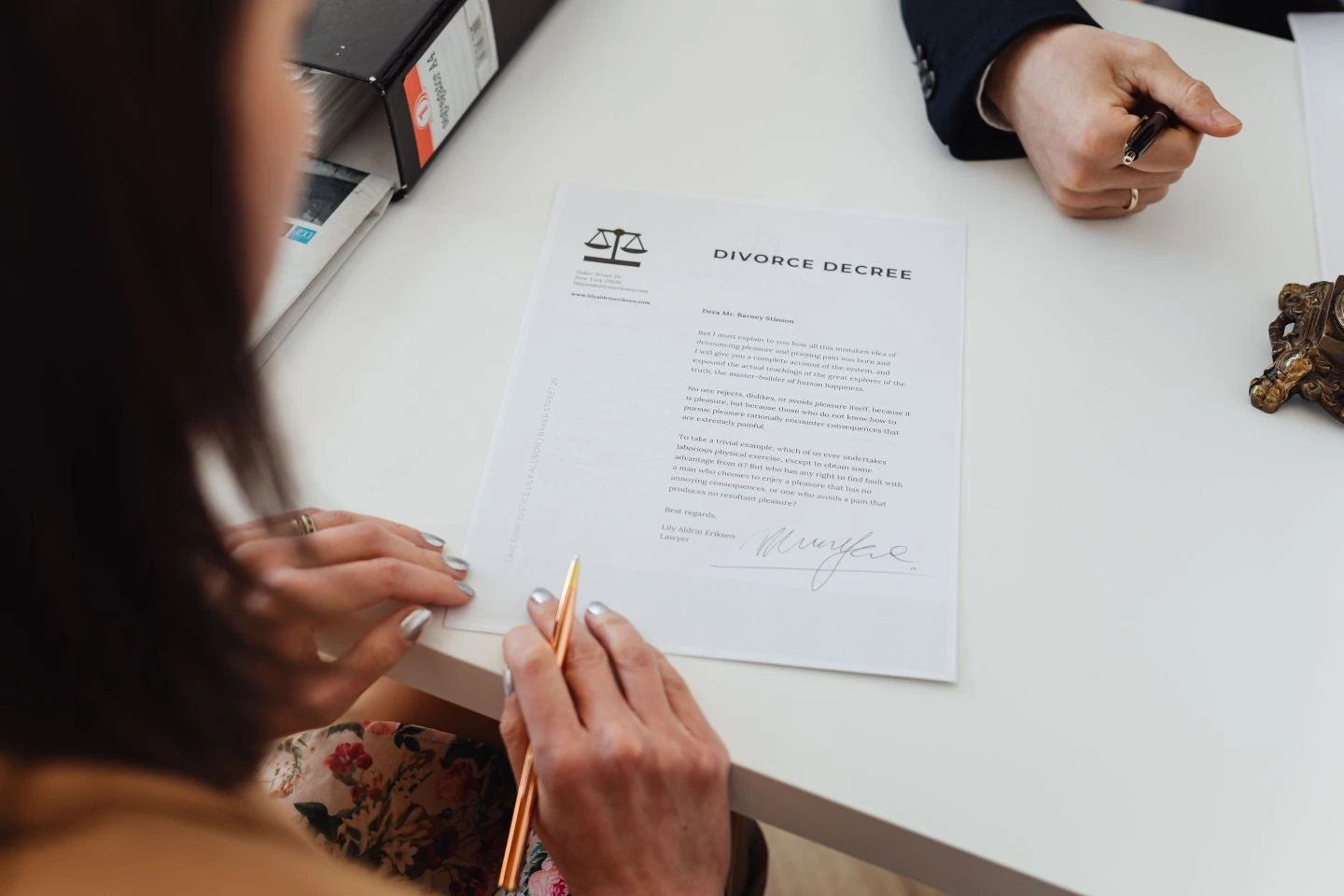
Even when agreements are made outside of the courtroom, Arizona law requires the court to make findings before entering a dissolution decree. These terms include a statement that the marriage is irretrievably broken, a parenting plan (if children are involved), and details about property division. These terms need to be written clearly and submitted through the proper process. A text message or handshake, for example, may not fully state the terms or satisfy requirements for a final divorce decree.
The Arizona Judicial Branch provides family-law forms, but forms do not replace legal advice about unusual facts or significant rights. We can help you understand the process and whether an uncontested path or mediation is a practical fit.
We work with Arizona couples seeking a respectful, mediation-forward path through divorce. We can discuss the process, your goals, and whether our divorce mediation services or uncontested divorce services fit your situation. You can also learn about Divorce Envy, explore property division services, or contact our team.
Call (480) 306-4443 to talk with us today.
No. Civility is about how you communicate and address disagreements. You can say no, ask for more information, make a counterproposal, or seek legal advice.
It can. Mediation may help resolve or narrow selected issues even if other questions remain disputed, as long as each person can participate safely and meaningfully.
Set clear boundaries, keep communications focused and documented, and consider professional intermediaries or individualized legal advice. If threats or coercion create a safety concern, seek help before attempting joint negotiations.